Quick answer: The Sicilian Defense is 1.e4 c5. Black fights for the d4 square with the c-pawn instead of copying White with 1…e5, so the position is unbalanced from move 1. The main line is the Open Sicilian, 2.Nf3 d6 3.d4 cxd4 4.Nxd4 Nf6 5.Nc3, where White keeps a small edge.
At a glance
- Moves: 1.e4 c5
- Type: Semi-open game. ECO codes B20 to B99.
- Black’s idea: trade the c-pawn for White’s d-pawn, keep 2 center pawns against 1, and use the half-open c-file.
- White’s main choices: the Open Sicilian (2.Nf3 and 3.d4), the Alapin (2.c3), the Closed Sicilian (2.Nc3), the Smith-Morra Gambit (2.d4) and the Bowdler Attack (2.Bc4).
- Good for: Black players who want to play for a win and will learn a separate answer to each White setup.
What is the Sicilian Defense?
The Sicilian Defense is Black’s reply 1…c5 to 1.e4, and one of the most popular. World champions Bobby Fischer and Garry Kasparov both used it as their main defense.
This guide is written for you as Black, with a section for White near the end, and it’s part of our guide to chess openings. So what makes 1…c5 work? Start with the first 2 moves.
The move order
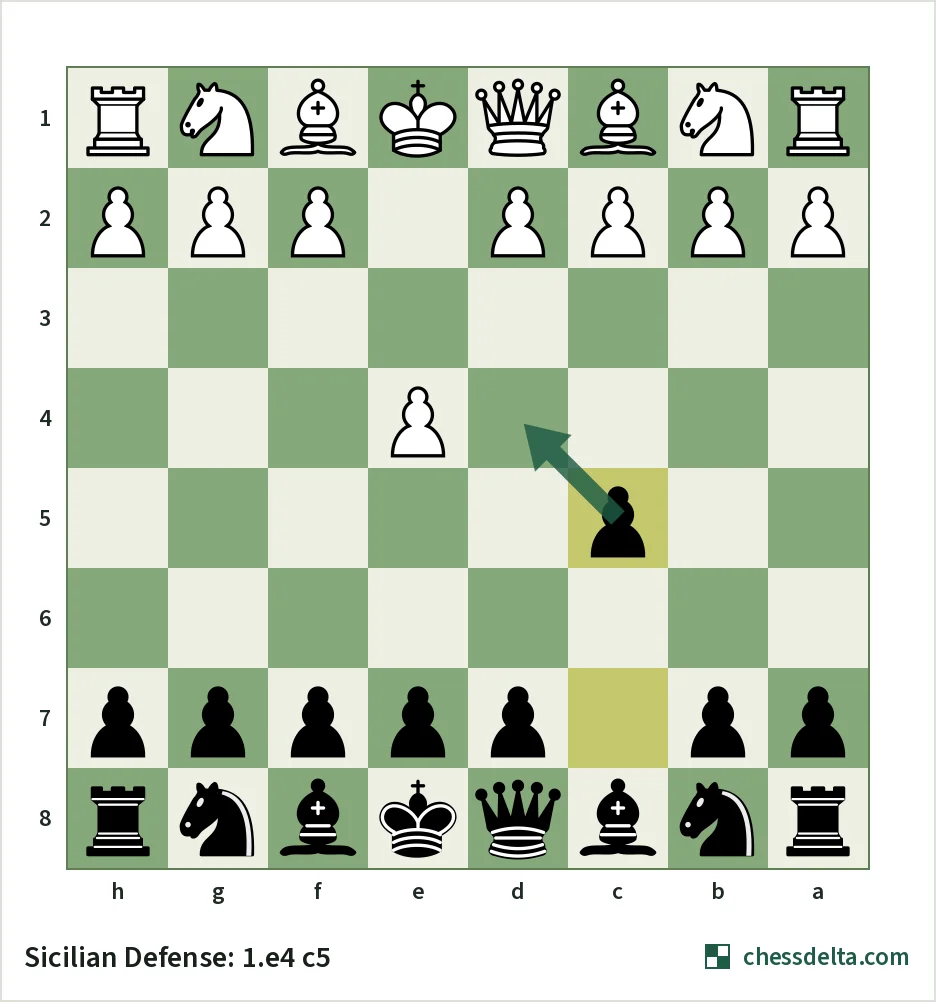
- 1.e4. White takes the center and wants to follow with d4.
- 1…c5. The c-pawn guards d4 from the side. If White plays d4 anyway, Black takes it, and White has swapped a center pawn for a wing pawn.
- 2.Nf3. White develops and gets ready for d4. About 80% of master games go this way. Black’s main replies are 2…d6, 2…Nc6 and 2…e6.
The main line continues 2…d6 3.d4 cxd4 4.Nxd4 Nf6 5.Nc3. Step through it on the board below.
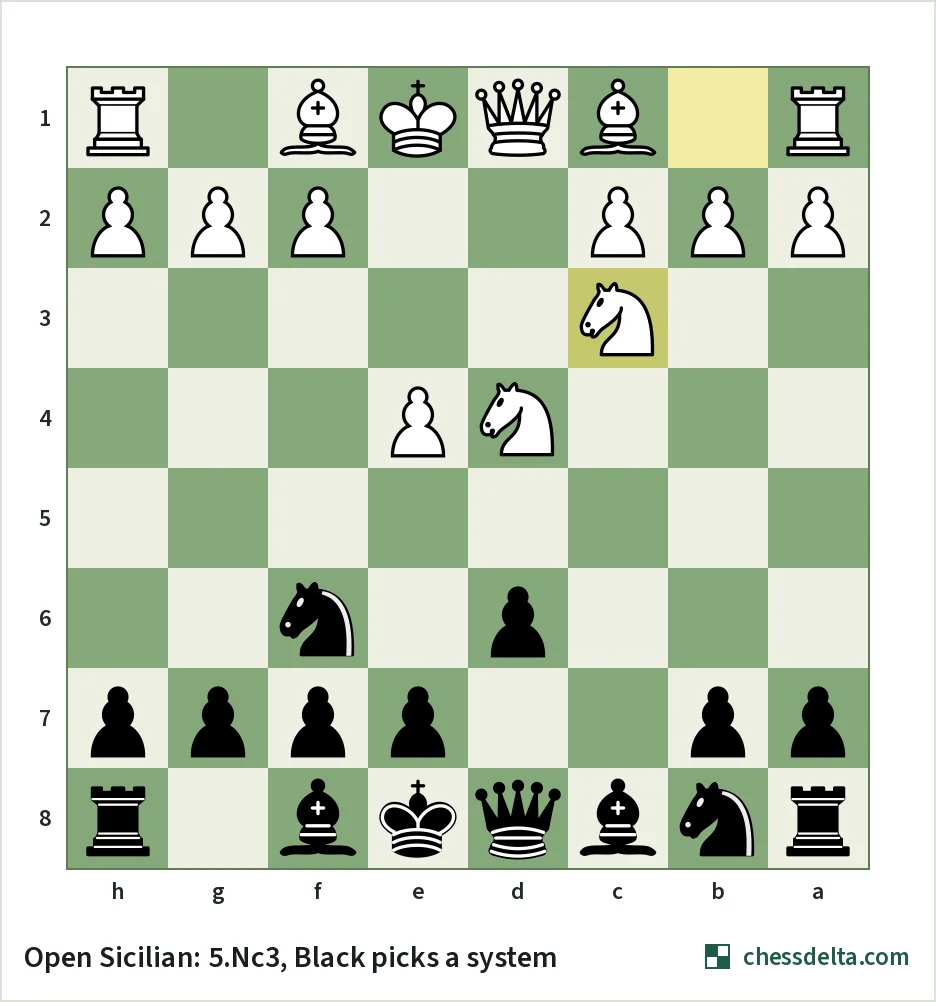
Why does 4…Nf6 matter so much? It attacks e4, and White’s best answer is 5.Nc3. That knight now stands in front of the c-pawn, so White can’t build a pawn wall with c4 and e4.
The ideas for both sides
Black’s plan
- Trade the c-pawn for the d-pawn. After 3…cxd4 Black has a d-pawn and an e-pawn, and White has only the e-pawn in the center.
- Use the half-open c-file. A rook on c8 and a queen on c7 press on c2 and on the knight on c3.
- Push …a6 and …b5. The b-pawn threatens …b4, which chases away the knight that guards e4.
- Play …d5 when it doesn’t lose a pawn. It opens lines for Black’s bishops and rooks.
White’s plan
- Attack early. After 3.d4 White’s pieces come out faster, and that lead fades if White waits.
- Castle queenside and push the g-pawn and h-pawn at Black’s king. Or castle kingside and play f4 and f5.
- Put a knight on d5. Once Black plays …e5, no black pawn can guard that square.
- Keep …d5 and …b4 under control.
The main branches of the Sicilian Defense
Open Sicilian: 2.Nf3 and 3.d4
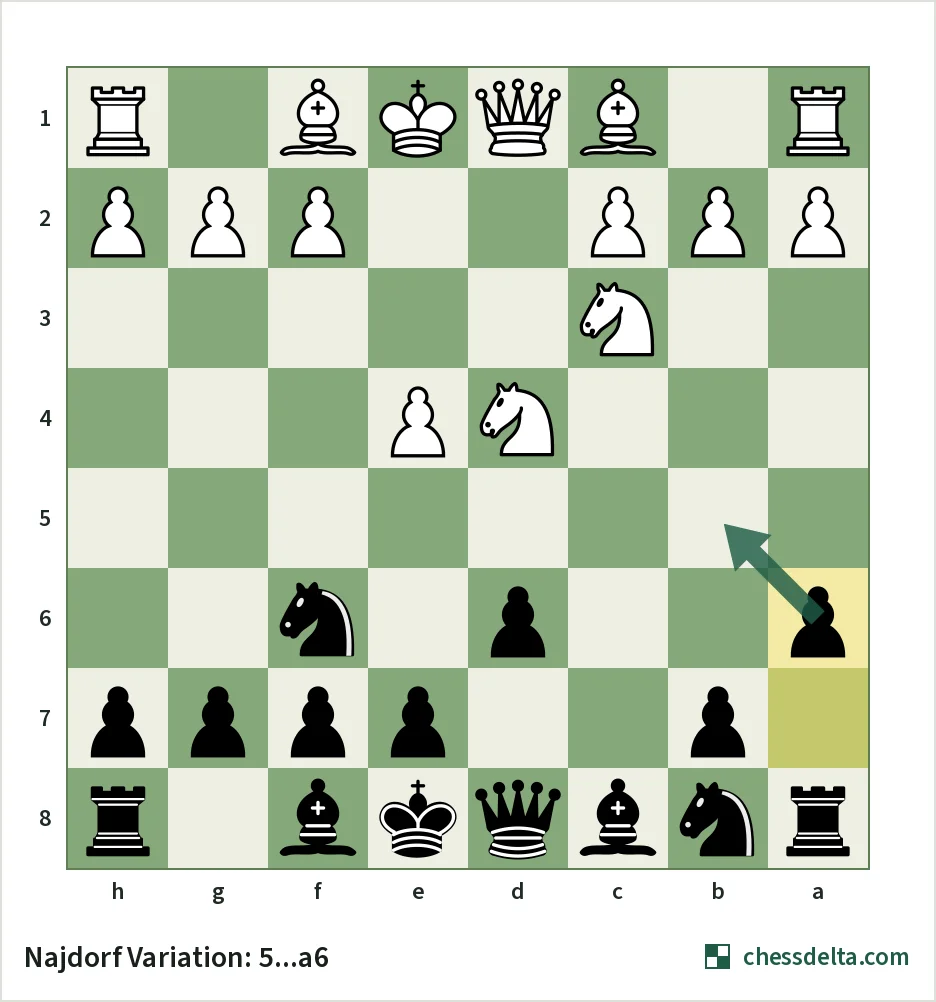
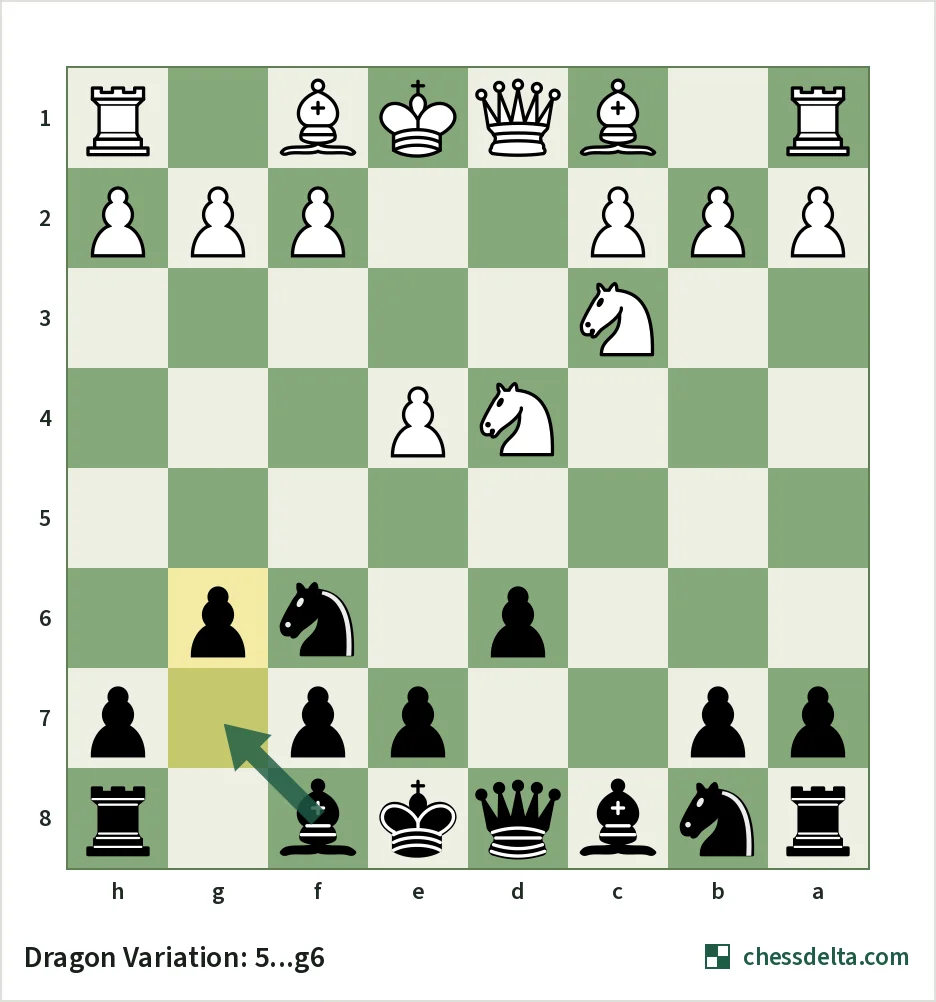
The Open Sicilian is White’s main line. After 2.Nf3 d6 3.d4 cxd4 4.Nxd4 Nf6 5.Nc3, it’s your turn to pick a system, and each one has its own theory:
- Najdorf Variation, 5…a6. The pawn keeps White’s pieces out of b5 and prepares …e5 or …b5. White keeps a small edge.
- Dragon Variation, 5…g6. The bishop goes to g7 and aims down the long diagonal. White is slightly better.
- Classical Variation, 5…Nc6. Black brings out the second knight before choosing a pawn setup. White keeps a small edge.
- Scheveningen Variation, 5…e6. Pawns on d6 and e6 guard c5, d5, e5 and f5. White is slightly better.
Prefer a different 2nd move? Black can also start with 2…Nc6 or 2…e6:
- Accelerated Dragon: 2…Nc6 3.d4 cxd4 4.Nxd4 g6.
- Lasker-Pelikan Variation, better known as the Sveshnikov: 2…Nc6 3.d4 cxd4 4.Nxd4 Nf6 5.Nc3 e5.
- Kan Variation: 2…e6 3.d4 cxd4 4.Nxd4 a6.
- Taimanov Variation: 2…e6 3.d4 cxd4 4.Nxd4 Nc6.
Alapin Variation: 2.c3
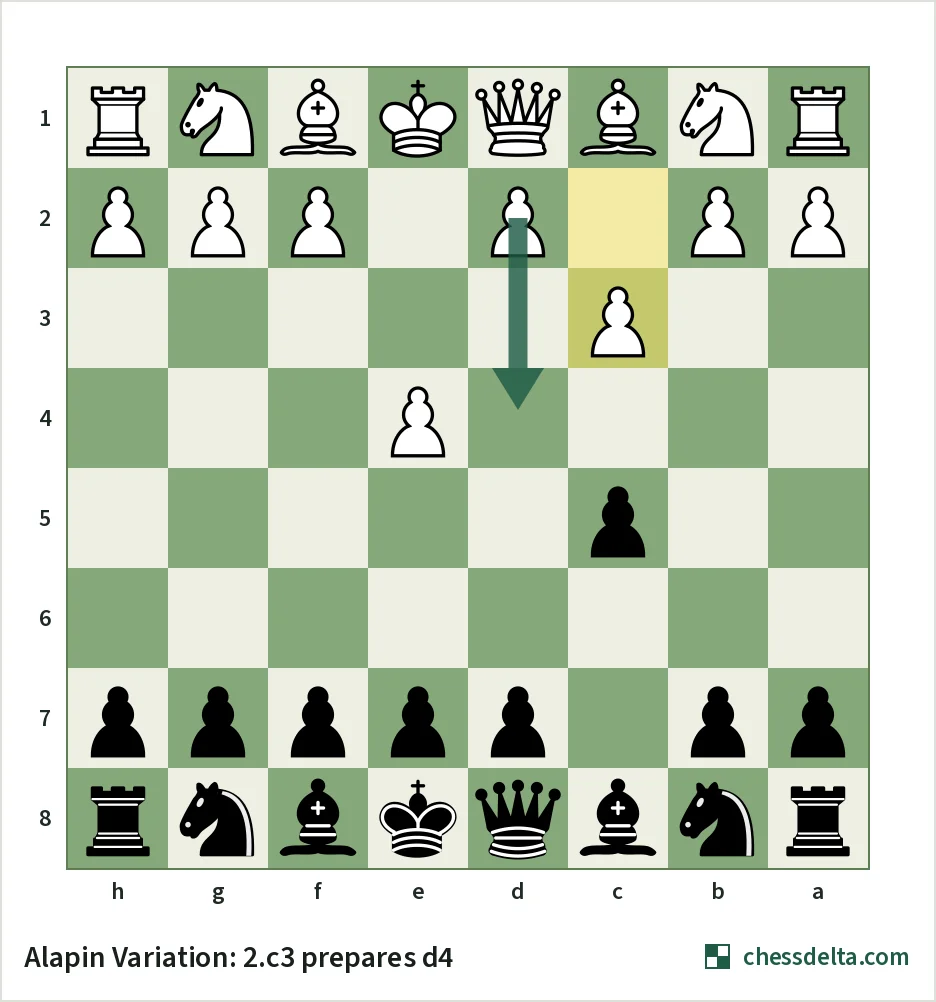
The Alapin Variation prepares d4 and plans to take back with the c-pawn, so White keeps 2 pawns in the center. How do you stop that? Hit e4 before White is ready.
After 2…Nf6 3.e5 Nd5 4.d4 cxd4 5.Nf3 Nc6 6.cxd4 d6, the game is equal. The other main reply is 2…d5 3.exd5 Qxd5.
Closed Sicilian: 2.Nc3
In the Closed Sicilian, White keeps the d-pawn at home. A typical start is 2.Nc3 Nc6 3.g3 g6 4.Bg2 Bg7 5.d3 d6, and the game is equal.
Then the 2 sides head for opposite wings. White attacks on the kingside with f4, while Black expands on the queenside with …Rb8 and …b5.
The Grand Prix Attack, 2.Nc3 Nc6 3.f4, is a faster version of the same kingside plan. After 3…g6 4.Nf3 Bg7 5.Bc4 e6, Black is at least equal.
Smith-Morra Gambit: 2.d4 cxd4 3.c3
The Smith-Morra Gambit offers a pawn for fast development and open c- and d-files. Should you take it? You can: after 3…dxc3 4.Nxc3 the position is equal, a shade in Black’s favor.
Want less to learn? The low-effort answer is 3…Nf6 4.e5 Nd5. That’s the same position as the Alapin line above after 4…cxd4, so one line covers both openings.
Bowdler Attack: 2.Bc4
The Bowdler Attack puts the bishop on its Italian Game square, aimed at f7. Against the Sicilian, though, it runs into 2…e6, which shuts the diagonal. Then …d5 hits the bishop.
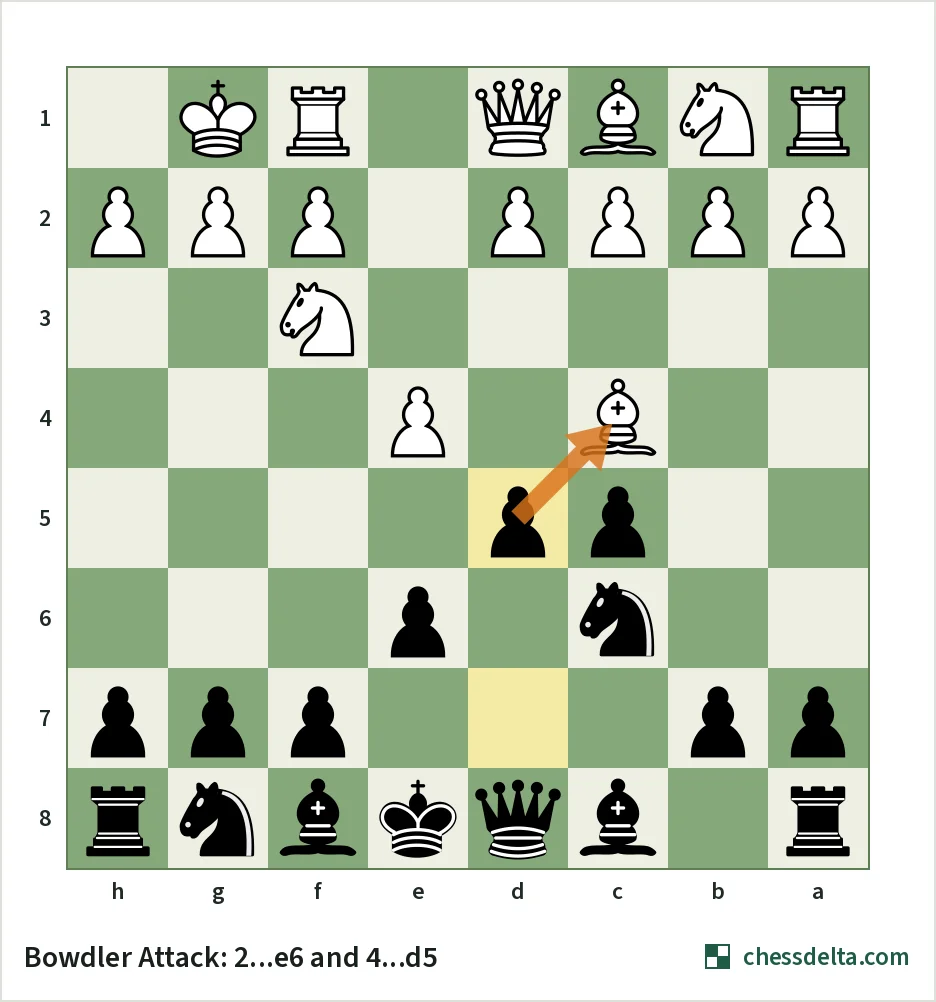
After 2.Bc4 e6 3.Nf3 Nc6 4.O-O d5 5.exd5 exd5 6.Bb5 Nf6, the bishop has moved twice and the game is equal. And if White goes for Scholar’s Mate with 3.Qh5, Black plays 3…Nc6 and is already clearly better.
Typical plans in the middlegame
- The exchange sacrifice on c3. Black gives a rook for the knight with …Rxc3. It wrecks White’s queenside pawns and removes the main defender of e4.
- The …d5 break. Black prepares it with …e6 or …Be6 and a rook on d8. White tries to stop it with a knight or bishop aimed at d5.
- Opposite-side castling. In the sharp Dragon and Najdorf lines White castles queenside and both sides attack. Speed counts for more than a pawn.
Common traps in the Sicilian Defense
The Siberian Trap
The Siberian Trap comes from the Smith-Morra Gambit Accepted: 1.e4 c5 2.d4 cxd4 3.c3 dxc3 4.Nxc3 Nc6 5.Nf3 e6 6.Bc4 Qc7 7.O-O Nf6 8.Qe2 Ng4. Now Black’s queen and knight both aim at h2.
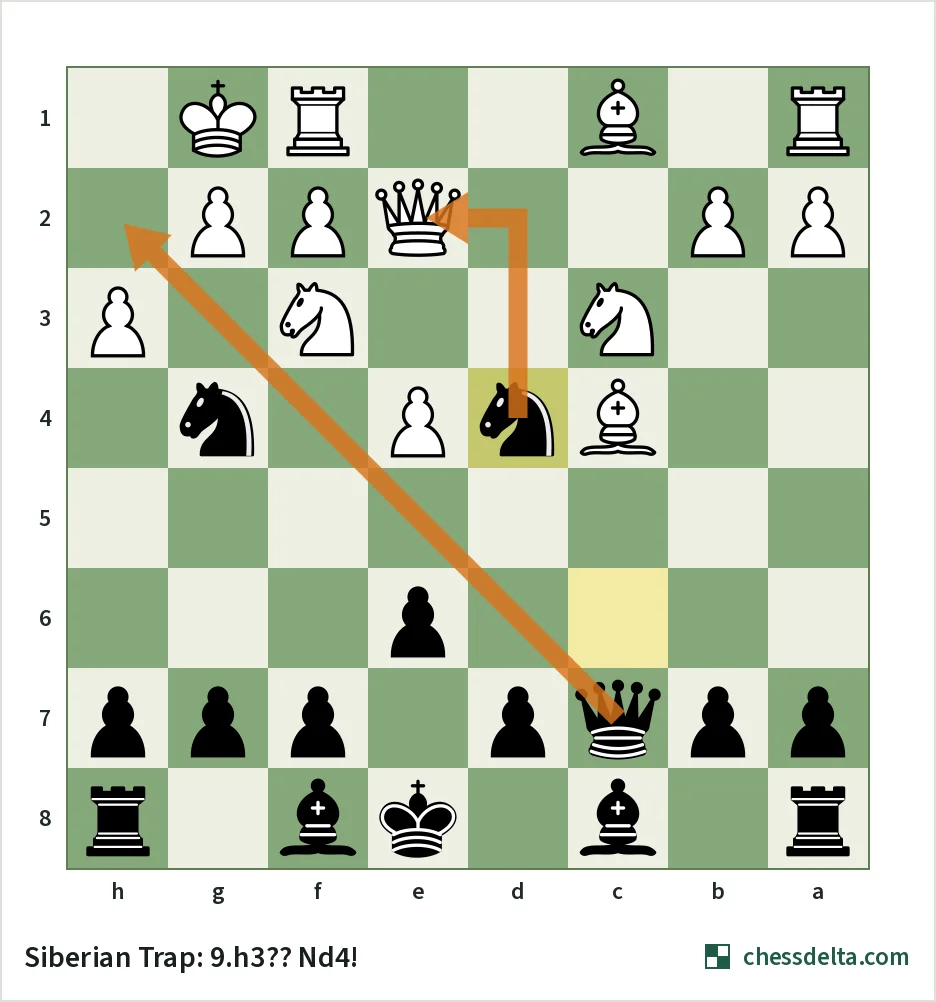
The natural 9.h3?? loses to 9…Nd4!, which attacks the queen and the f3 knight, the piece that guards h2. If White takes with 10.Nxd4, then 10…Qh2 is checkmate.
White’s best is 10.hxg4 Nxe2+ 11.Bxe2, giving up the queen for 2 knights, and Black is winning.
Can White escape? Yes, in 2 ways. 9.Rd1 keeps the game equal, and one move earlier, 8.Nb5 gives White a slight edge. So set the Siberian Trap in fast games, but don’t count on it.
The Magnus Smith Trap
The Magnus Smith Trap catches Black in the Classical Variation: 1.e4 c5 2.Nf3 d6 3.d4 cxd4 4.Nxd4 Nf6 5.Nc3 Nc6 6.Bc4 g6?! 7.Nxc6 bxc6 8.e5. Spot the mistake? Black has mixed the Classical knight on c6 with the Dragon’s …g6.
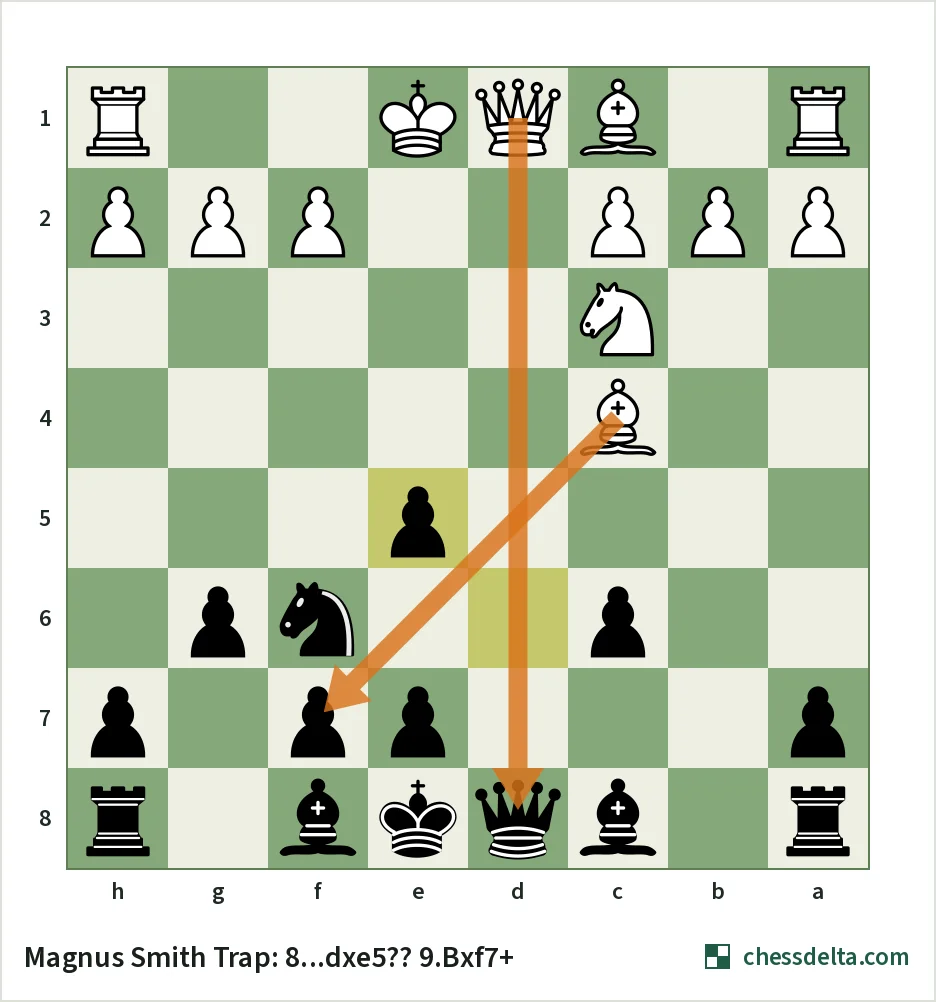
Taking the pawn with 8…dxe5?? opens the d-file and loses the queen: 9.Bxf7+ Kxf7 10.Qxd8. Black’s best is 8…Ng4, and White keeps a small edge.
The real fix comes on move 6. Against 6.Bc4, play 6…e6 instead. The pawn blocks the bishop, and White has only a small edge.
How to play against the Sicilian Defense
To play against the Sicilian Defense as White, choose a line by how much theory you want to learn.
- Open Sicilian, 2.Nf3 and 3.d4. The most ambitious choice. White keeps a small edge after 2.Nf3, while 2.c3 is only equal. The catch? You need a line against the Najdorf, the Dragon and every other system.
- Alapin Variation, 2.c3. One setup against everything. A good first choice if you have little time to study.
- The Bb5 lines. 2.Nf3 Nc6 3.Bb5 is the Nyezhmetdinov-Rossolimo Attack, usually just called the Rossolimo. 2.Nf3 d6 3.Bb5+ is the Moscow Variation. White keeps a small edge in both, and you skip the Open Sicilian theory.
- Closed Sicilian or Grand Prix Attack, 2.Nc3. A slow kingside attack with f4. The Closed line above is equal, and the plan is easy to follow.
- Skip 2.Bc4. Black is equal at once after 2…e6 and …d5.
Learn the Sicilian Defense in 5 moves
Playing Black? If you only remember 5 things, make it these:
- Play 1…c5, then 2.Nf3 d6 3.d4 cxd4 4.Nxd4 Nf6. Take on d4 every time, then attack e4.
- After 5.Nc3, pick one system and keep it. 5…a6 or 5…g6. Never mix …Nc6 and …g6 when White’s bishop is on c4.
- Against 2.c3, play 2…Nf6. Against 2.d4 cxd4 3.c3, play 3…Nf6 and reach the same position.
- Against 2.Bc4, play 2…e6, then …d5.
- Against 2.Nc3, copy White’s setup: …Nc6, …g6, …Bg7 and …d6.
[Event "Sicilian Defense: Open Sicilian starter line (Najdorf)"]
[Result "*"]
1. e4 c5 2. Nf3 d6 3. d4 cxd4 4. Nxd4 Nf6 5. Nc3 a6 6. Be2 e5 7. Nb3 Be7 8. O-O O-O 9. Be3 Be6 *
[Event "Sicilian Defense: Alapin starter line"]
[Result "*"]
1. e4 c5 2. c3 Nf6 3. e5 Nd5 4. d4 cxd4 5. Nf3 Nc6 6. cxd4 d6 7. Bc4 Nb6 8. Bb5 dxe5 9. Nxe5 Bd7 *
Both lines end with White holding no more than a small edge.
FAQ
Is the Sicilian Defense good for beginners?
The Sicilian Defense can be good for beginners, if you learn ideas before lines. It asks more of you than 1…e5, because White has at least 5 different setups and each needs its own answer.
So start with the 5 rules above and the chess opening principles. New to the game? Read chess for beginners first.
Why is it called the Sicilian Defense?
It’s called the Sicilian Defense because an old Italian manuscript called the opening “il gioco siciliano”, the Sicilian game. The English master Jacob Henry Sarratt made the name standard in English in 1813. But the opening is older still: Giulio Polerio had analyzed it as early as 1594.
What is the best response to the Sicilian Defense?
The strongest response to the Sicilian Defense is 2.Nf3 followed by 3.d4, the Open Sicilian. White keeps a small edge in the main line. Want less theory? 2.c3, the Alapin Variation, is equal and far quicker to learn.
What is the best Sicilian variation for Black?
Of the main Sicilian variations for Black, the Najdorf (5…a6) holds White to a small edge, and the Dragon (5…g6) leaves White slightly better. For a first Sicilian, though, the Dragon setup is easier to remember: …g6, …Bg7, then castle.
Pick one and play it for 50 games before you judge it.
Is the Sicilian Defense better than 1…e5?
The Sicilian Defense isn’t clearly better than 1…e5: White keeps about the same small edge after either move. So which should you play? 1…e5 is simpler to learn and leads to the Italian Game and the Ruy Lopez. The Sicilian gives lopsided positions where both sides can play for a win.
What is the difference between the Open and Closed Sicilian?
The difference between the Open and Closed Sicilian is what happens to White’s d-pawn. In the Open Sicilian, White plays 2.Nf3 and 3.d4, and the d-pawn is traded for Black’s c-pawn. In the Closed Sicilian, White plays 2.Nc3 and keeps the pawn on d3. The center stays shut and both sides attack on the wings.
Read next
Updated November 18, 2026.