Quick answer: The Englund Gambit is 1.d4 e5. Black gives up a pawn to set a trap: 2.dxe5 Nc6 3.Nf3 Qe7 4.Bf4 Qb4+ 5.Bd2 Qxb2 6.Bc3?? Bb4 7.Qd2 Bxc3 8.Qxc3 Qc1#. White refutes the trap with 6.Nc3. Stockfish rates the gambit clearly better for White (about +1.5).
At a glance
- Moves: 1.d4 e5
- Type: Queen’s Pawn Game. ECO code A40.
- Main line: 2.dxe5 Nc6 3.Nf3 Qe7
- Black’s idea: give up the e-pawn, bring the queen out early and win material on b2.
- White’s answer: take the pawn, guard it with 3.Nf3 and 4.Bf4, then meet the queen raid with 5.Bd2 and 6.Nc3.
- Good for: blitz and bullet games as Black. In slow games White has time to find 6.Nc3.
What is the Englund Gambit?
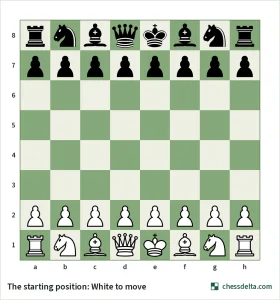
The Englund Gambit is Black’s reply 1…e5 to 1.d4. Black offers the e-pawn on move 1 to drag White out of normal queen’s pawn play and into an early queen fight.
Black needs the trap. White needs the 2 moves that stop it. This guide covers both, and it is part of our guide to chess openings.
The move order
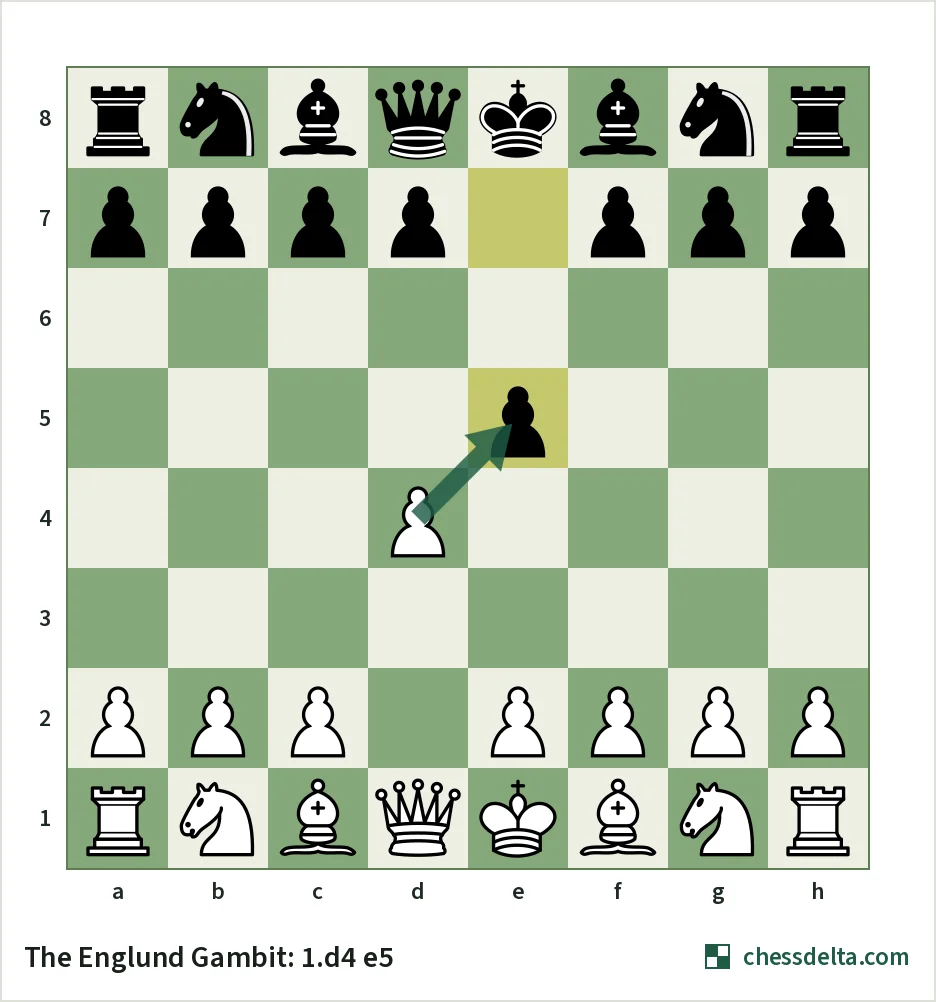
- 1.d4 e5. Black puts a pawn where White can take it for nothing.
- 2.dxe5. White takes. Stockfish gives White about +1.5 here.
- 2…Nc6 3.Nf3. Black attacks the e5 pawn. White guards it and develops a knight.
- 3…Qe7. The main line. The queen attacks e5 a second time and gets ready to check on b4.
- 4.Bf4 Qb4+. White guards e5 again. The check also hits the bishop on f4 and the pawn on b2.
- 5.Bd2 Qxb2. The bishop blocks. The queen takes b2 and attacks the rook on a1.
Step through the main line on the board below.
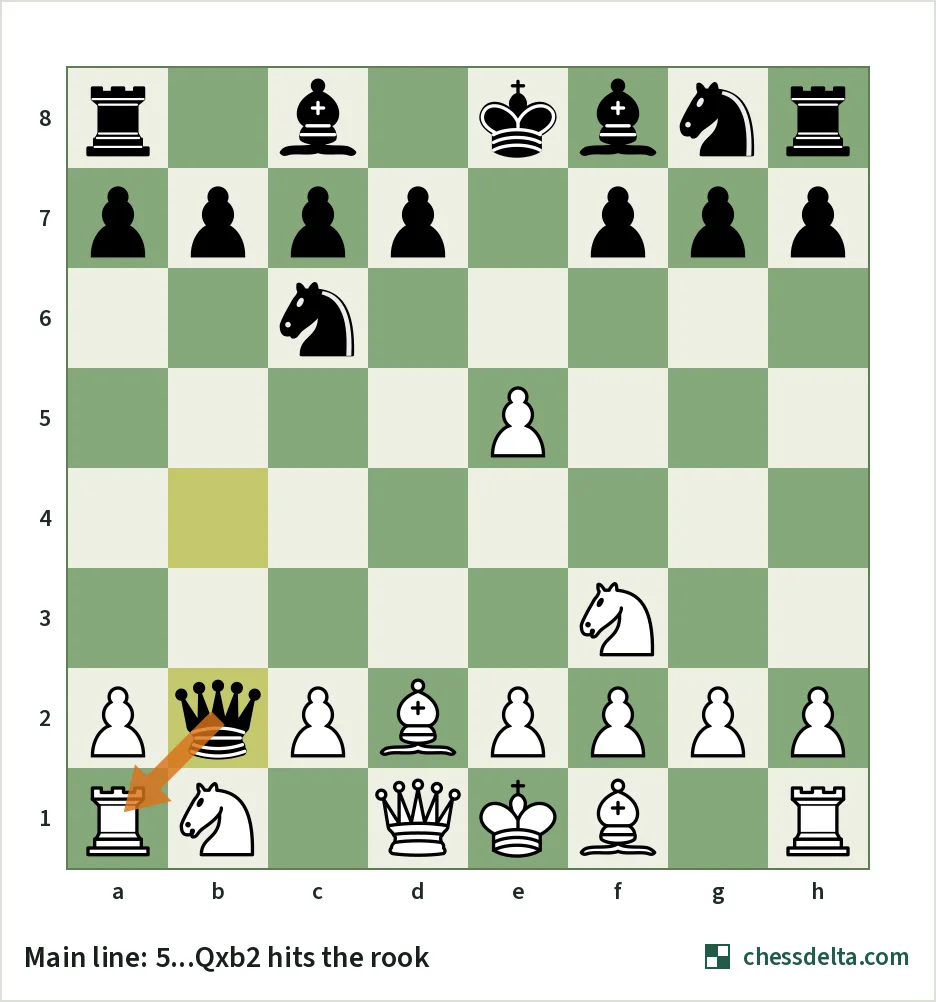
The game turns on White’s 6th move. 6.Bc3 loses. 6.Nc3 is winning for White.
The Englund Gambit trap: 6.Bc3?? Bb4!
The Englund Gambit trap needs White to play 6.Bc3. The move looks right, because the bishop attacks the queen and covers the rook. Black answers 6…Bb4. Now the bishop on c3 is pinned to the king, so it can’t take the queen.
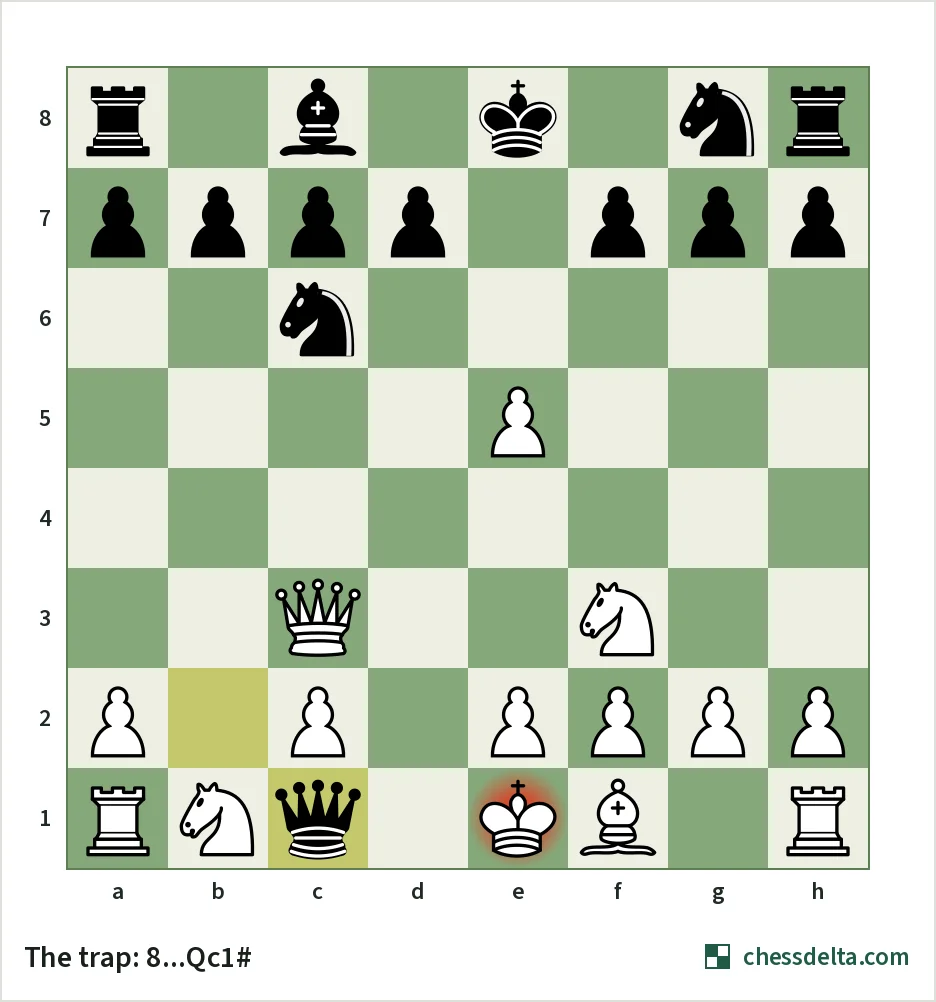
Every white move now loses material. The usual tries:
- 7.Bd2 Qxa1. The bishop steps back and the rook on a1 falls.
- 7.Qd2 Bxc3 8.Qxc3 Qc1#. White’s queen leaves d2, and nothing guards c1.
- 7.Qd2 Bxc3 8.Nxc3 Qxa1+. White avoids mate and loses a rook.
- 7.Bxb4 Nxb4. The knight and queen both attack c2, and the rook on a1 still hangs.
After 6…Bb4 Stockfish rates the position winning for Black (about -7).
How does White refute the Englund Gambit?
White refutes the Englund Gambit queen raid with 6.Nc3. It is the only good move in the position. The knight leaves b1, so the queen on d1 now guards the rook on a1. Next comes Rb1, which attacks the black queen.
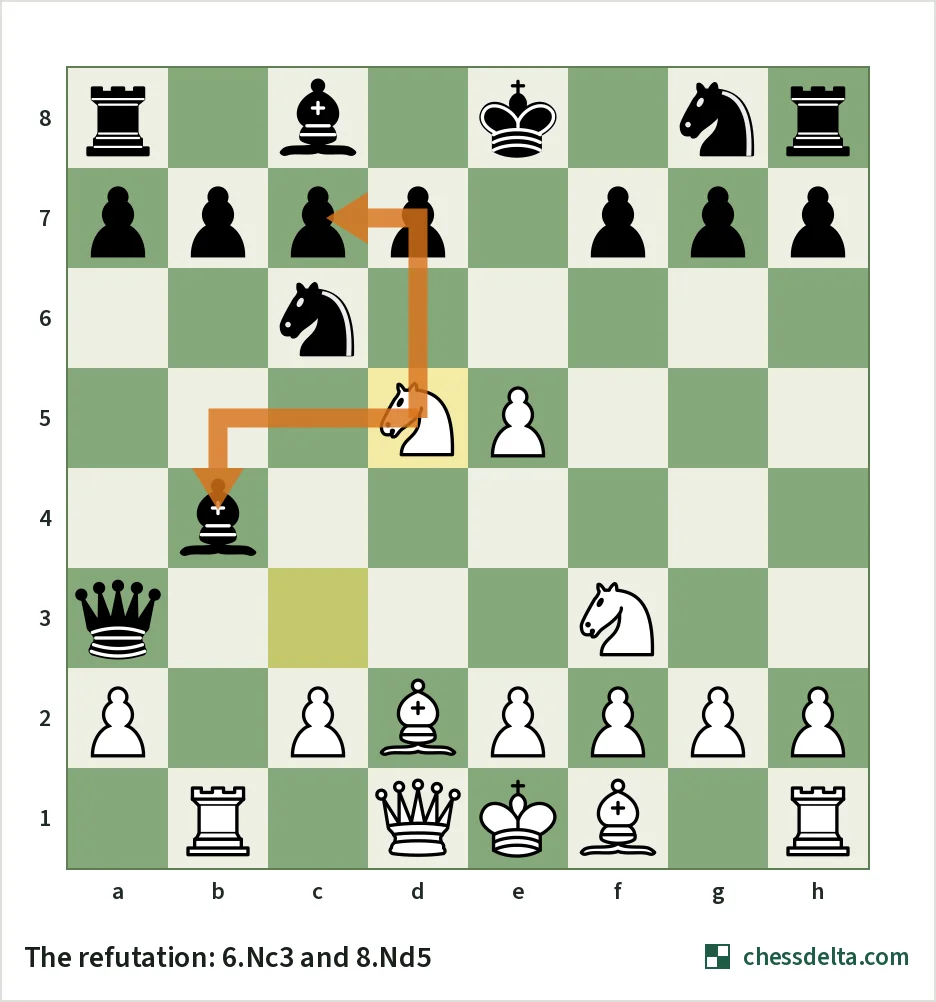
The main line runs 6.Nc3 Bb4 7.Rb1 Qa3 8.Nd5. The knight attacks the bishop and threatens Nxc7+, a fork of king and rook. After 8…Bxd2+ 9.Qxd2 Kd8 10.e4 the pawns are level, but Black’s king can’t castle and only 2 black pieces are developed. Stockfish rates it winning for White (+2.6 or more).
Black’s other 2 tries are no better:
- 6…Nb4. Black aims at c2. White plays 7.Nd4, which guards c2, and is winning (about +4).
- 5…Qe7 or 5…Qc5. Black retreats instead of taking on b2. White keeps the extra pawn and is close to winning (about +2).
Block the check with the bishop, not the queen
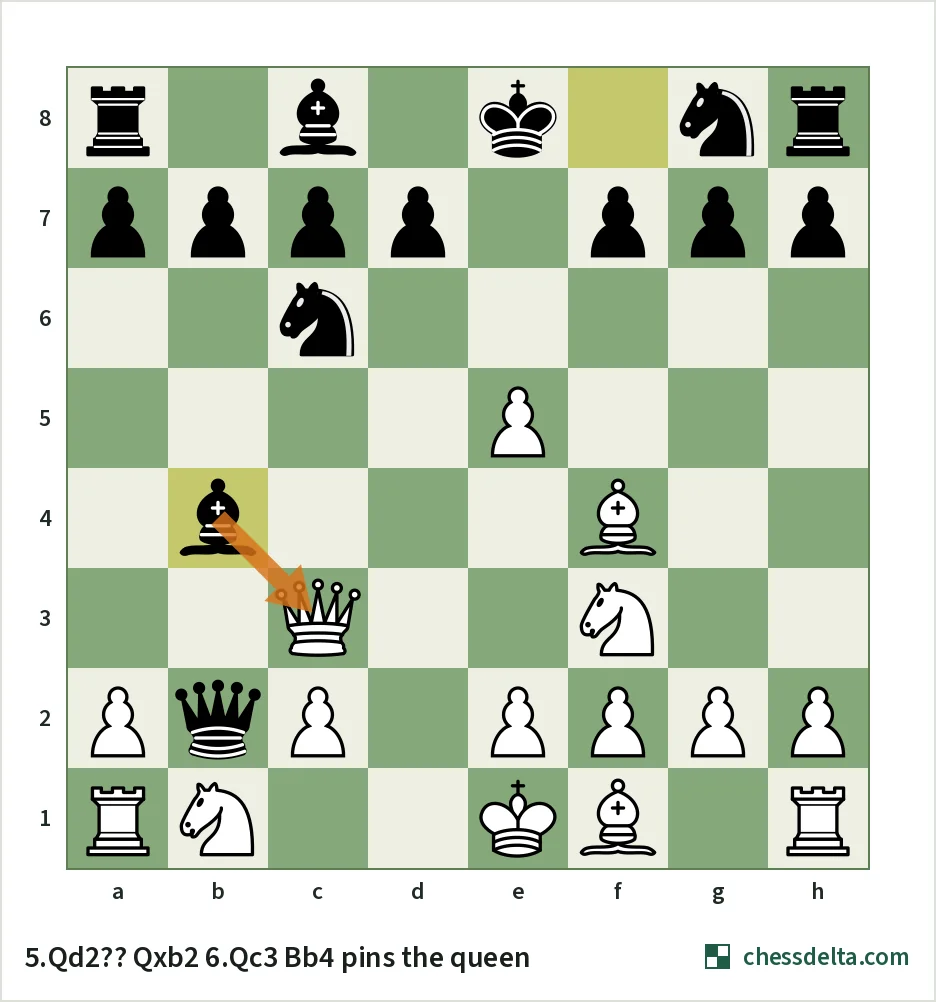
After 4…Qb4+ the move 5.Qd2?? loses. Black plays 5…Qxb2, and the rook on a1 is stuck behind the knight. If White offers a queen trade with 6.Qc3, then 6…Bb4 pins the queen to the king. After 7.Qxb4 Nxb4 Black has a queen for a bishop.
5.Nc3 is also wrong. Black takes the bishop with 5…Qxf4. Only 6.Nd5 gets the material back, and Stockfish calls that equal.
The simple option: 4.Nc3
If you want less to remember, play 4.Nc3 instead of 4.Bf4. The knight blocks the b4 check before it happens. After 4…Nxe5 5.e4 Black has the pawn back and White is still clearly better (about +1.1). Viktor Korchnoi won a short game with 4.Nc3 in a 1978 simultaneous exhibition.
What else can Black play after 2.dxe5?
Black has 6 other named lines after 2.dxe5. White is clearly better or winning in all of them.
- Hartlaub-Charlick Gambit, 2…d6. Also called the Blackburne-Hartlaub Gambit. Black offers a second pawn to develop fast after 3.exd6 Bxd6. White is clearly better there (+1.1). Stockfish prefers 3.Nf3 (about +1.5).
- Soller Gambit, 2…f6. Black offers the f-pawn instead. After 3.e4 White is clearly better.
- Mosquito Gambit, 2…Qh4. The queen comes out with nothing to attack. After 3.Nf3 it has to move again, and White is winning (+3.2).
- Felbecker Gambit, 2…Nc6 3.Nf3 Bc5. Black develops and plans …f6. After 4.Nc3 White is clearly better.
- Soller Gambit Deferred, 2…Nc6 3.Nf3 f6. The Soller idea one move later. After 4.e4 White is clearly better.
- Zilbermints Gambit, 2…Nc6 3.Nf3 Nge7. The knight heads for g6 to win back the e5 pawn. After 4.Nc3 White is clearly better.
White also has a named sideline. In the Stockholm Variation, 3…Qe7 4.Qd5, White holds e5 with the queen. After 4…f6 Stockfish gives White less than +1, about half of what 4.Bf4 keeps.
Is the Englund Gambit sound?
No. The Englund Gambit is not sound. Stockfish rates it clearly better for White: about +1.5 after 2.dxe5 and about +1.7 after 3…Qe7. If Black goes for the b2 pawn and White finds 6.Nc3, White is winning.
The Englund Gambit breaks the chess opening principles. Black’s queen moves 3 times in the first 5 moves, and no other black piece except one knight has moved. It still wins fast games, because 6.Bc3 looks like the natural move. It is almost never played at the top level.
How to play the Englund Gambit as Black
- Use it in fast games. The trap needs an opponent who has no time to think on move 6.
- Against 4.Nc3, play 4…Nxe5. You get the pawn back. Every other move leaves White winning.
- After 6.Nc3, play 6…Bb4 and 7…Qa3. After 7.Rb1 it is Stockfish’s choice for the queen.
- It stops the London System. After 1.d4 e5 White can’t play 2.Bf4, because 2…exf4 wins the bishop. London System players who play 2.Bf4 on autopilot lose a piece.
- Have a second defense for slow games. 1…d5 is sound and leads to the Queen’s Gambit.
Learn the Englund Gambit in 5 moves
- As White, take the pawn: 2.dxe5.
- Guard e5 twice: 3.Nf3 and 4.Bf4.
- Block the check with 5.Bd2. Never 5.Qd2.
- After 5…Qxb2 play 6.Nc3. Never 6.Bc3.
- As Black, answer 6.Bc3 with 6…Bb4. If 7.Qd2, play 7…Bxc3 and then 8…Qc1# or 8…Qxa1+.
[Event "Englund Gambit: the trap"]
[Result "0-1"]
1. d4 e5 2. dxe5 Nc6 3. Nf3 Qe7 4. Bf4 Qb4+ 5. Bd2 Qxb2 6. Bc3 Bb4 7. Qd2 Bxc3 8. Qxc3 Qc1# 0-1
[Event "Englund Gambit: White's refutation"]
[Result "*"]
1. d4 e5 2. dxe5 Nc6 3. Nf3 Qe7 4. Bf4 Qb4+ 5. Bd2 Qxb2 6. Nc3 Bb4 7. Rb1 Qa3 8. Nd5 Bxd2+ 9. Qxd2 Kd8 10. e4 *
FAQ
How do you counter the Englund Gambit?
Take the pawn with 2.dxe5, then play 3.Nf3 and 4.Bf4. After 4…Qb4+ block with 5.Bd2, and after 5…Qxb2 play 6.Nc3. Stockfish rates that position winning for White.
What is the Englund Gambit trap?
The Englund Gambit trap is 1.d4 e5 2.dxe5 Nc6 3.Nf3 Qe7 4.Bf4 Qb4+ 5.Bd2 Qxb2 6.Bc3?? Bb4 7.Qd2 Bxc3 8.Qxc3 Qc1#. White’s losing move is 6.Bc3. Black’s key move is 6…Bb4, which pins the bishop.
Should White accept the Englund Gambit?
Yes. 2.dxe5 is the only second move that keeps a clear edge (about +1.5). After 2.d5 or 2.e4 Stockfish rates the game equal.
Is the Englund Gambit good for beginners?
As White, learn it early: 5.Bd2 and 6.Nc3 are easy to remember. As Black, the Englund Gambit teaches a habit that costs games later, moving the queen out before the other pieces. Like Scholar’s Mate, it stops working once your opponents know it. If you are new to the game, start with chess for beginners.
Why is it called the Englund Gambit?
The Englund Gambit is named after the Swedish player Fritz Englund. He sponsored a tournament in 1932 and 1933 in which every game started from the position after 4.Qd5. The 3…Qe7 main line was introduced by Kārlis Bētiņš, who also developed the Latvian Gambit.
Read next
Every move and position on this page was checked with python-chess and Stockfish. Updated November 18, 2026.