Shogi, also called Japanese chess or the Game of Generals, is the Japanese member of the chess family. Sit down at a shogi board and it looks familiar. Then your opponent drops your own captured knight back on the board against you.
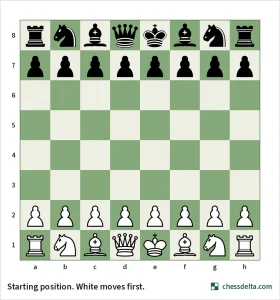
That’s the biggest difference, along with board size. A chessboard is 8×8 while a shogi board is 9×9. And in chess, captured pieces are gone for good, but in shogi the player who captured them can bring them back into play.
Difference Between Chess And Shogi:
| Chess: | Shogi: |
| 1. White is the first player | 1. Black is the first player |
| 2. Each player has 16 pieces | 2. Each player has 20 pieces |
| 3. There is a castling move | 3. There is no castling move |
| 4. There is an en passant move | 4. There is no en passant move |
| 5. Only pawn can be promoted | 5. All pieces except the gold general and the king can promote |
| 6. A pawn can promote to either a queen, knight, rook, or bishop | 6. A given piece can only promote to one other kind of piece |
| 7. There is an initial two space pawn move | 7. There is no initial two space pawn move |
| 8. Pawns move straightly in the forward direction but capture diagonally | 8. Pawns capture the same way they move |
| 9. There is a queen | 9. There is no queen |
| 10. Bishop movement is restricted to one color square. | 10. Bishop is not restricted to only one color square |
| 11. There is no formal handicap system | 11. There is a handicap system |
| 12. Captured pieces are out of the game | 12. Captured pieces can be returned to the board |
Which Came First Chess Or Shogi?
Chess came first, in the sense that shogi grew out of chess’s oldest ancestor, chaturanga. Most historians believe chess developed from chaturanga. Shatranj, Tamerlane chess, shogi and xiangqi all evolved from it too.
According to Wikipedia, chaturanga, the earliest form of chess, began in India around the 6th or 7th century CE.
From India, it traveled to Persia.
After the Arabs conquered Persia, the game spread through the Muslim world. Then the Moorish conquest of Spain carried it into Southern Europe.
In 15th-century Europe, the way the pieces moved changed. That’s where the modern game begins.
Modern tournament play came later, in the second half of the 19th century.
Also Read: Who Invented Chess?
So how did it reach Japan? Chaturanga, the earliest ancestor of chess, likely arrived via China or Korea sometime after the Nara period.
According to Wikipedia, shogi in its present form was played as early as the 15th century. But a direct ancestor without the drop rule was recorded from 1210, in a historical document called the Nichūreki.
Shogi is the earliest chess variant that let you put captured pieces back on the board.
Where did that idea come from? One theory says the drop rule was invented in the 15th century. It may link to a practice of that time: captured mercenaries switching sides instead of being killed.
Are The Rules Of Chess And Shogi The Same?
The rules of chess and shogi are not the same, but the goal is: checkmate the other player’s king. The differences are in how the pieces move, drops and the handicap system.
To see how far apart they are, start with a quick refresher on the basic rules of chess.
Chess
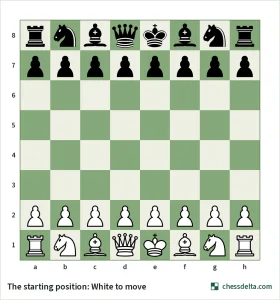
- Chess is played on an 8 by 8 board of 64 squares in alternating colors.
- Each side has 16 pieces, white or black, for 32 in total. Each side gets 8 pawns, 2 bishops, 2 knights, 2 rooks, 1 queen and 1 king.
- The player with the white pieces always makes the first move in chess.
- On each turn, you move 1 of your pieces. If you can, you may also capture an enemy piece.
- How the chess pieces move depends on the piece.
- The king moves 1 square in any direction.
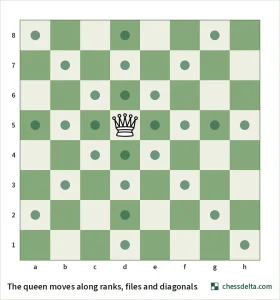
- The queen moves any distance along diagonals, ranks or files.
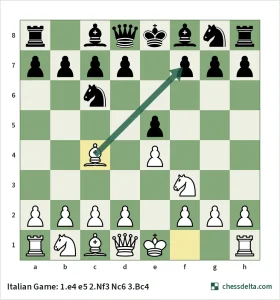
- The bishop moves only along diagonals, while the rook moves only along ranks and files.
- The knight moves in an L shape and can jump over other pieces.
- The pawn moves 1 square forward, or up to 2 squares forward on its first move.
- Every piece except the pawn captures the same way it moves. The pawn moves straight forward but captures diagonally.
- When a king is attacked, it’s in check.
- If the king is in check and there’s no way to get out of it, that’s checkmate, and the game is over.
- If the king isn’t in check but the player has no legal moves, that’s stalemate. You can read more about stalemate here.
Got the chess basics? Now here’s where shogi starts to look different.
Shogi
- Shogi is played by 2 players on a 9 by 9 board with 81 squares.
- Each player has 20 flat, wedge-shaped, pentagonal pieces.
- The players are called Black and White, with Black moving first.
- Pieces are sized by importance. From largest to smallest, each side has: 1 king, 1 rook, 1 bishop, 2 gold generals, 2 silver generals, 2 knights, 2 lances and 9 pawns.
- Shogi pieces fall into 3 groups by how they move:
- Stepping Pieces: move only 1 square at a time.
- Ranging Pieces: move any number of open squares in a line.
- Jumping Pieces: jump over pieces in the way to reach their square.
- Under certain conditions, most pieces can promote into a different piece.
- Every piece captures the same way it moves, pawns included.
- Here’s how each shogi piece moves:
- The king: 1 square in any direction, straight or diagonal.
- The rook: any number of squares straight up, down or sideways.
- The bishop: any number of squares diagonally.
- The gold general: 1 square straight up, down or sideways, or 1 square diagonally forward.
- The silver general: 1 square in any diagonal direction, or 1 square straight forward.
- The knight: 1 square straight forward, then 1 square diagonally forward, jumping over any pieces in between.
- The lance: any number of squares straight forward.
- The pawn: 1 square straight forward, and it captures the same way. There’s no 2-square first move and no en passant.
- And here’s what each piece promotes to:
| Piece: | Promoted To: |
| King | Does Not Promote |
| Rook | Dragon King / Dragon |
| Bishop | Dragon Horse/ Horse |
| Gold General | Does Not Promote |
| Silver General | Gold General |
| Knight | Gold General |
| Lance | Gold General |
| Pawn | Gold General |
Drops:
Here’s the rule that changes everything. In shogi, a captured piece doesn’t leave the game. It becomes yours, and you can bring it back.
On your turn, you can place a captured piece on almost any empty square. That’s called a drop, and it uses up your whole move.
So each turn you either move a piece on the board or drop one. Never both.
Dropped pieces always come in unpromoted. You can drop a piece inside the promotion zone, but it doesn’t promote on that turn.
Chess has nothing like this, which makes drops one of the major differences between the 2 games.
Captured pieces waiting to be dropped are said to be ‘in hand’. Drops give shogi its aggressive feel. Once a few pieces have been captured, the number of possible moves goes up.
That flips a habit you have from chess. In chess, trades simplify the game. In shogi, every trade gives both players more pieces to drop, so the game gets more complicated.
Handicap System:
Shogi has a handicap system for games between players of very different strength. The stronger player starts at a disadvantage to even things out.
That means a weaker player can face a very strong one and still have an even chance of winning.
In a handicap game, one or more of White’s pieces are removed before the start. In return, White moves first.
Chess has no handicap system like this, so it’s another clear difference.
Draws:
Shogi has very few draws. One reason is the drop rule: captured pieces keep coming back, so the material never runs out the way it does in chess.
Illegal Move:
In professional and serious amateur (tournament) shogi, an illegal move loses the game on the spot. The loss stands even if play went on and the move was only spotted later.
There’s one catch. If neither the opponent nor a third party points out the illegal move, and the opponent later resigns, the resignation stands.
Curious how chess handles it? Read our complete guide to illegal moves in chess.
Ending Of The Game
Most shogi games end in checkmate, or in a resignation once mate can’t be stopped. Pieces never leave the game for good, so there’s nearly always enough material to deliver mate.
Still, there are 3 other ways a game can end:
- Repetition
- Impasse
- Illegal move
Repetition and impasse are rare. Illegal moves are rare in professional games too, but not among amateurs, especially beginners.
Also Read: Chess Vs Go: Difference Between Them Explained
Is Shogi Harder Than Chess?
Yes, shogi is generally considered harder than chess, mainly because of drops. Captured pieces come back into play, so trades make shogi more complicated, while in chess they simplify it.
In chess, once you capture a piece, it’s off the board for good. You can’t use it.
Don’t confuse that with pawn promotion. There, your pawn is upgraded and replaced by a queen, knight, rook or bishop. You can read more about pawn promotion in chess here.
In shogi, though, every piece you capture joins your army. The numbers show how much bigger that makes the game:
| Topic: | Chess: | Shogi: |
| Board Size | 64 | 81 |
| Number of Pieces | 32 | 40 |
| Number of Different Pieces | 6 | 8 |
| Possible Games | 10123 | 10226 |
| Average Game Length | 70 | 115 |
Also Read: How Many Chess Games Are Possible?
Conclusion
Shogi is the Japanese cousin of chess, and it differs in many ways. The 3 that change your game most are the bigger board, drops and the handicap system.
If you play chess, try a few shogi games. Drops will make you see trades in a whole new way.